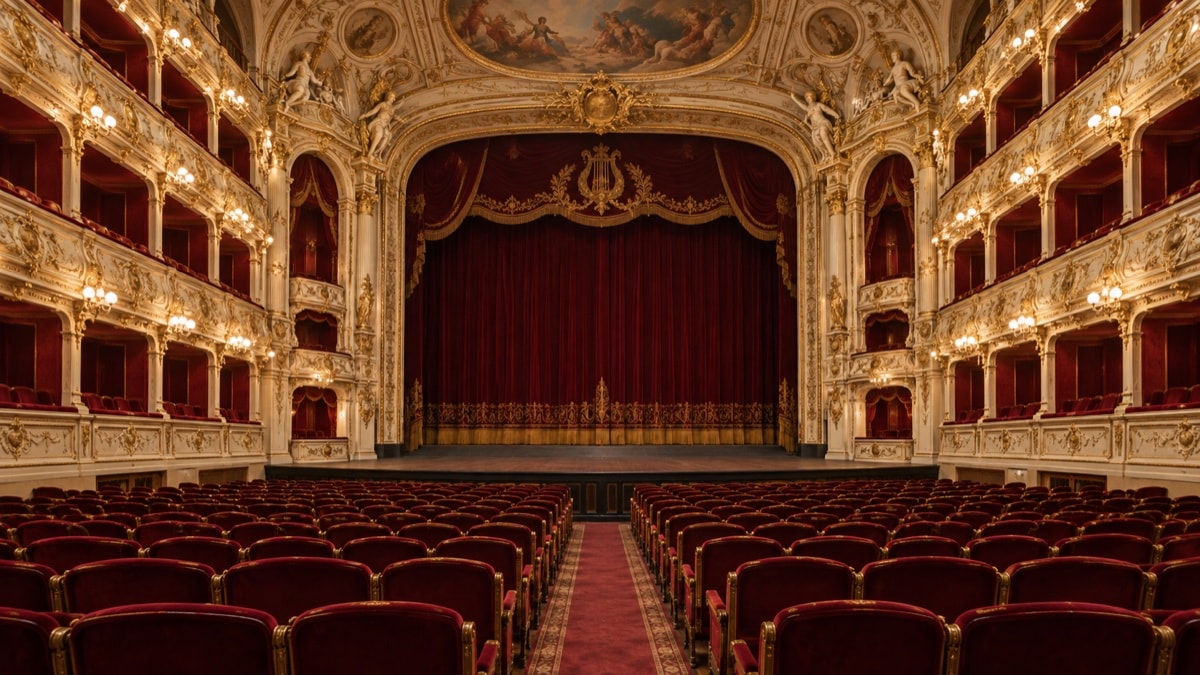
This page is a map of the Ukrainian repertory documented across Orpheus and Lyra. It does not claim to be a complete national survey. Instead, it helps readers distinguish opera arias, art songs, older historical song and tango, then directs them to the pages where names and works are most precisely recorded.
Opera: character inside a drama
The Ukrainian opera arias page is the strongest operatic shelf. It names Odarka and Oksana in Hulak-Artemovskyi’s Zaporozhets za Dunayem, Maryltsia in Lysenko’s Taras Bulba, Mavka in Kyreiko’s The Forest Song, and Ingegerd in Heorhiy Maiboroda’s Yaroslav the Wise. All are documented in Renata Babak’s repertory.
An aria carries a character’s words inside a larger drama. Even when a page isolates one number, the role, opera and composer provide a frame. The separate Taras Bulba guide shows how a single opera can be followed from literary subject to character-level repertory.
Art song: poem and musical reading
Art song operates on a smaller scale. The Ivan Franko page begins with a poet whose words entered Ukrainian romances; the Shevchenko page brings poetry together with a substantial visual-art catalogue; and the Platon Maiboroda page begins with a composer and performer. Together they show three ways to index the same basic relationship among text, music and interpretation.
The collection also names Yuriy Ishchenko’s lullaby on words by Lesia Ukrainka, a song by Lesia Dychko on words credited to Rudenko, and songs by Marko Kropyvnytskyi and Anatol Kos-Anatolskyi. These entries appear beside opera on Babak’s Ukrainian repertory page, illustrating how a performer’s catalogue can cross genre boundaries.
A setting gives a poem a musical pace. Repeated words can lengthen a moment that occupies only one line on the page; a pause can interrupt the grammatical flow. Listening for the stressed syllables and the ends of phrases shows how musical accents relate to spoken language.
The accompaniment is another part of this reading. It may repeat a figure, introduce material before the voice enters or continue after the final word. Compare the printed poem with the sung text and note any repetitions or omissions. Those differences belong to the setting and need not be differences between editions of the poem.
Historical song: memory in compact form
The song about Petro Doroshenko represents an older tradition. Its catalogue label identifies a seventeenth-century historical figure but does not give a secure title, author or named performer. The page therefore focuses on how historical songs shape memory through text and repeated melody, while leaving missing catalogue fields open.
This is different from an opera that assigns historical characters to a cast. The compact song can circulate in variants and may preserve a point of view rather than a chronological account. Its presence helps extend the collection beyond named composers and institutional stages.
Tango: the lyric popular song
The Ukrainian tango feature contains the broadest title list. Bohdan Vesolovskyi is central, joined by Stepan Huminilovych, Yaroslav Barnych, Marta Pashkivska, Olha Ilkiv, Myroslav Skoryk, Volodymyr Ivasiuk and others. The titles repeatedly turn toward love, memory, return, evening and loss.
Tango belongs here not as an interruption to opera and art song, but as another text-bearing vocal form. It links rhythm and social dance with the intimacy of the lyric voice. The collection’s song titles make that relationship visible even when no arrangement or performer is specified.
Places and performers
Lviv and Kyiv give the repertory geographical anchors through opera houses, conservatory life, composers, conductors and the career captions of Renata Babak and Solomiia Krushelnytska. Performer pages then cut across the forms: Babak moves from opera to art song, while the smaller Ivan Kozlovsky and Taras Shtonda pages preserve more fragmentary trails.
For a single table of names and works, continue to the written repertoire index. This page remains the map; the index is the finding aid.