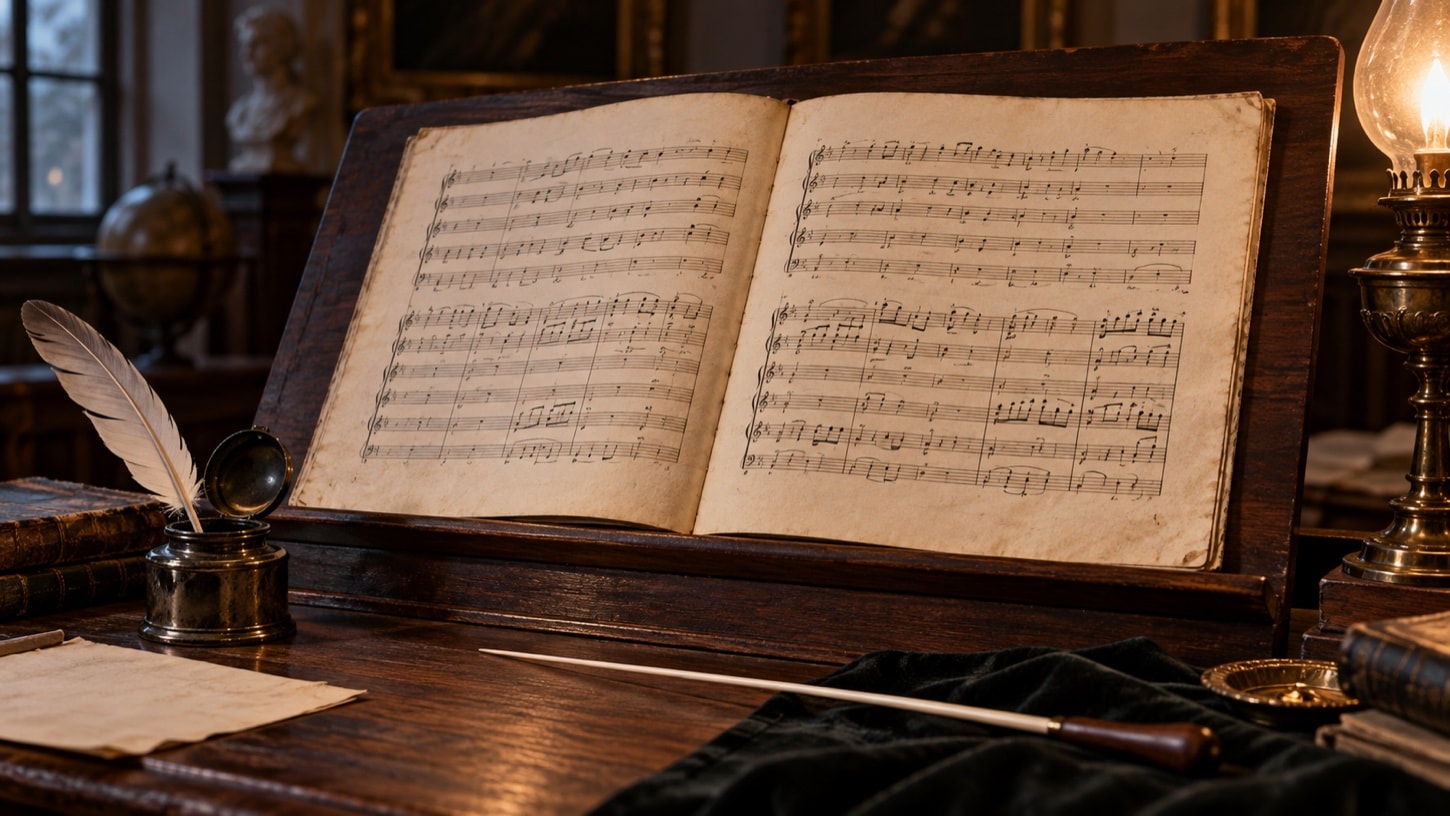
This page focuses on a well-defined subject: the Ukrainian opera Taras Bulba by Mykola Lysenko. The same work appears in the detailed Ukrainian-arias catalogue, which identifies Maryltsia’s aria as part of Renata Babak’s repertory. Those two facts—composer and documented excerpt—provide a firm foundation without requiring an invented production history or synopsis.
A literary title in music
The title connects Lysenko’s opera with the story associated with Nikolai Gogol. Orpheus and Lyra also listed a Taras Bulba illustration among the visual works of Taras Shevchenko. The opera and illustration are parallel artistic responses to a literary subject; this site does not claim that the drawing was made for Lysenko’s stage work.
That distinction mirrors the collection’s Mazepa page, where Pushkin’s Poltava, Tchaikovsky’s opera and Shevchenko’s Maria occupy related but separate lines. In both cases, literature supplies a durable story-world that different artists approach through image and music.
Maryltsia’s aria in Renata Babak’s repertory
The Ukrainian-arias catalogue identifies “Maryltsia’s aria” from Taras Bulba, composed by Lysenko and performed by Renata Babak. The character spelling is kept close to the documented English label because no Ukrainian-script form is supplied. The opera, composer and performer are explicit; no act, scene, date or venue is added.
This item belongs beside Babak’s other Ukrainian dramatic repertory: Odarka and Oksana in Zaporozhets za Dunayem, Mavka in The Forest Song, and Ingegerd in Yaroslav the Wise. The full aria catalogue keeps these entries together and also records several art songs.
Lysenko’s place on the site
Mykola Lysenko is the composer who gives this page its focus. Rather than adding a broad biography, the guide uses his name to connect work, genre and repertory. Taras Bulba represents historical Ukrainian opera on a larger dramatic scale than the art songs associated with Ivan Franko, Taras Shevchenko and Platon Maiboroda.
The work also helps explain why the collection cannot be reduced to a single singer. Babak provides the documented aria entry, but the opera has its own identity as a composed stage work. A repertory catalogue should allow both routes: from performer to work and from work back to performer.
Reading the preserved entry
A short entry can still answer several useful questions. What is the work? Taras Bulba. Who composed it? Mykola Lysenko. Which excerpt does the collection identify? Maryltsia’s aria. Which performer does it name? Renata Babak. What remains unrecorded? The exact scene, production, venue and date.
Keeping that final list visible is as important as the confirmed fields. It prevents a brief catalogue label from being mistaken for a full performance record and gives future researchers a clear set of questions to pursue in scores, programmes and library catalogues.
Continue through Ukrainian opera
Readers can continue to Ivan Kozlovsky and Ukrainian arias for a smaller performer-led trail, or to Ukrainian music across the collection for a map that separates opera, art song, historical song and tango. The general written index provides the broadest cross-reference.
Further reference: The Mykola Lysenko reference page offers wider context on the composer. Performance detail here remains limited to the Maryltsia aria entry preserved by Orpheus and Lyra.